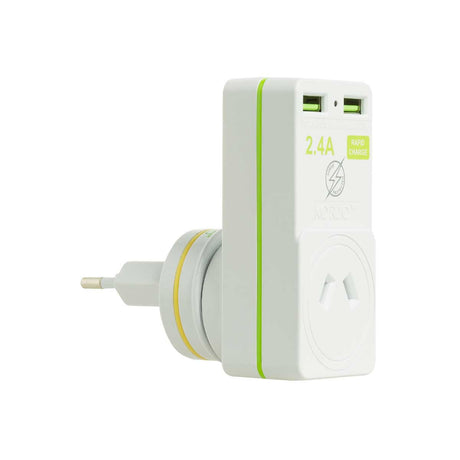
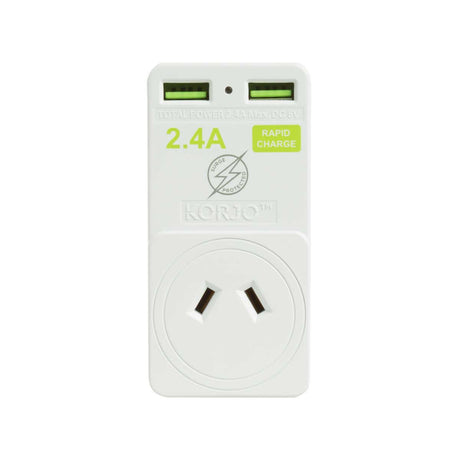
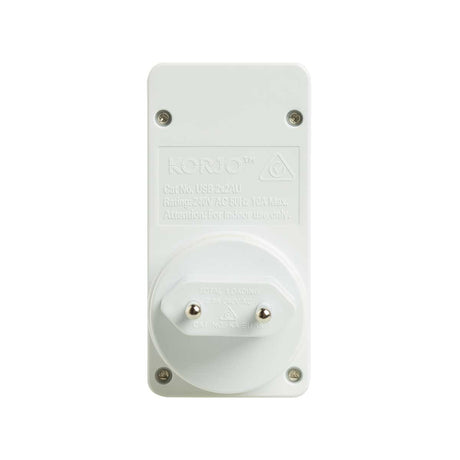
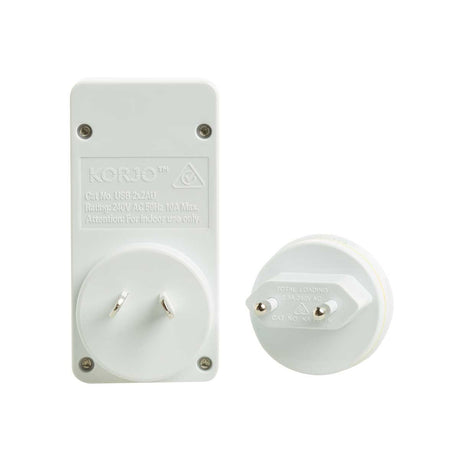
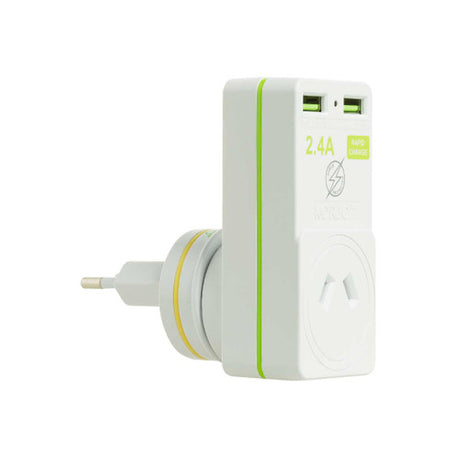
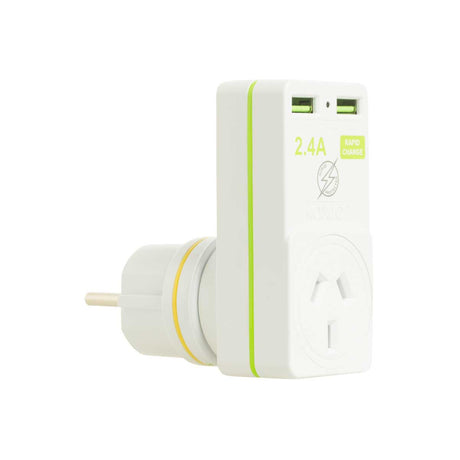
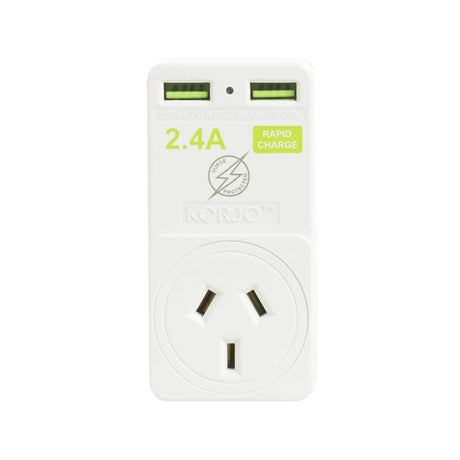
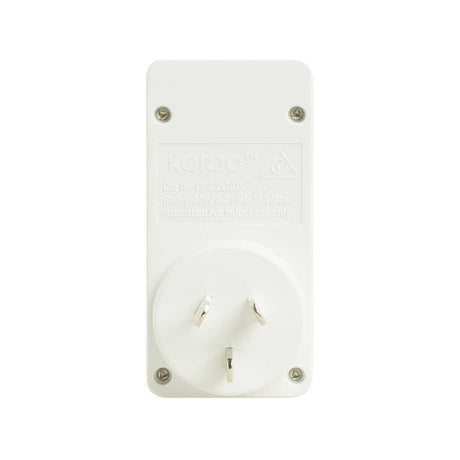
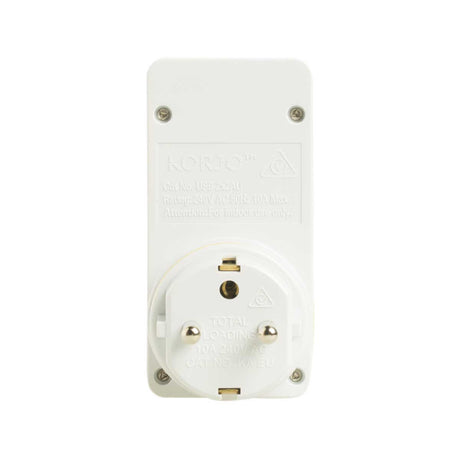
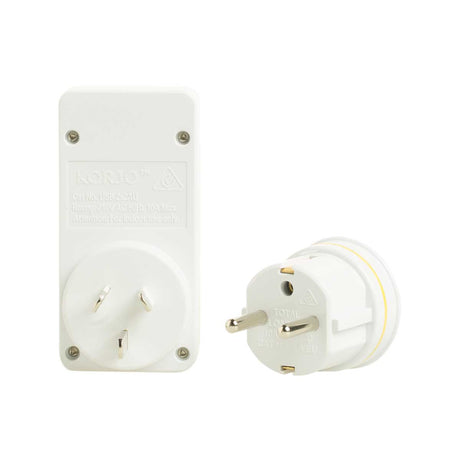
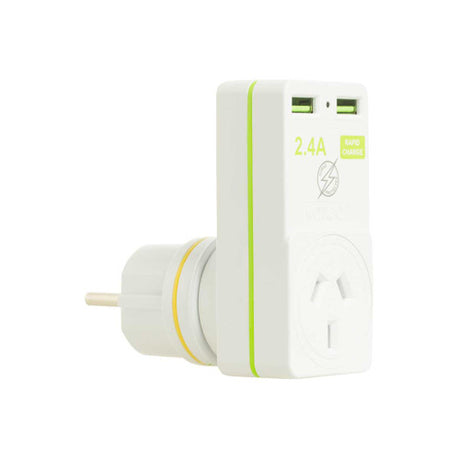
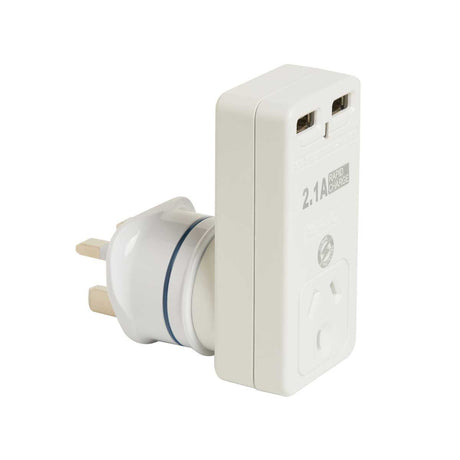
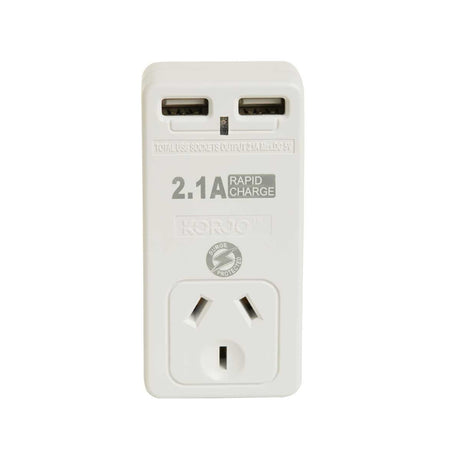
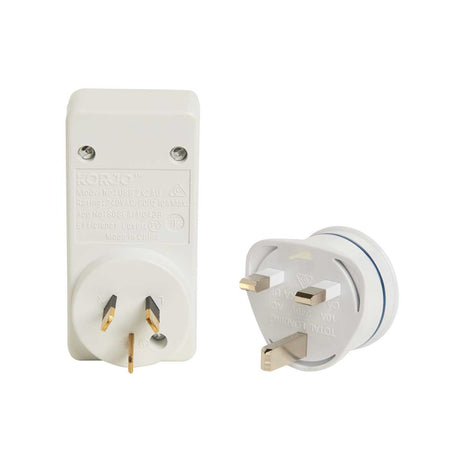
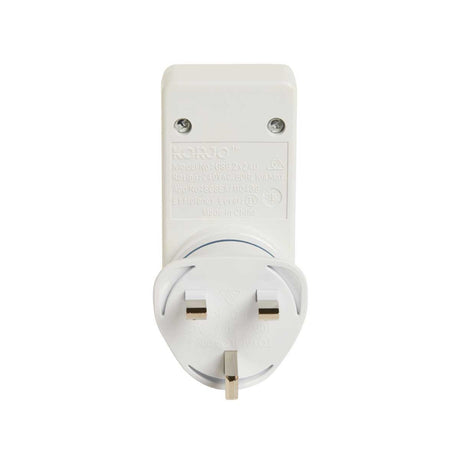
Leaving Australia means leaving behind the Type I power socket — and almost every country in the world uses something different. Korjo has been solving this problem for Aussie travellers for decades, producing compact, reliable travel adaptors that are purpose-built for the destinations Australians visit most. Whether you're heading to London, Paris, Bali, Tokyo, or New York, there's a Korjo adaptor designed specifically for your trip.
Travel Gear is an authorised Australian stockist for Korjo, shipping from our Charlestown NSW warehouse with fast delivery across Australia. Every Korjo adaptor is tested to meet Australian and international electrical safety standards.
Which Adaptor Do I Need? A Guide by Destination
United Kingdom & Ireland — Type G (3-pin square)
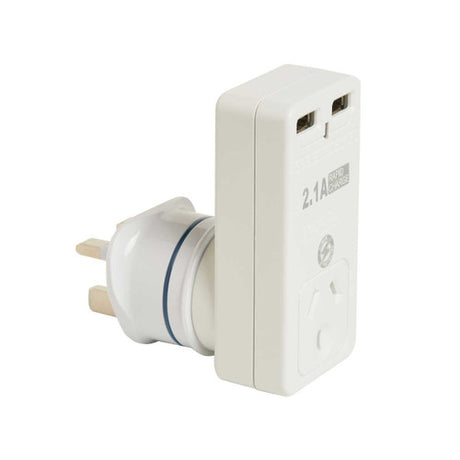
The UK uses a distinctive 3-pin rectangular plug that's unique to Britain, Ireland, Malta, and a handful of other countries. It's one of the bulkiest socket types in the world, but Korjo's UK adaptor keeps things compact. Also used in Hong Kong, Singapore, Malaysia, and parts of the Middle East.
Europe (Continental) — Type C/E/F (2-pin round)
Most of continental Europe — France, Germany, Italy, Spain, Netherlands, Greece, and beyond — uses the 2-pin round Europlug. Italy and Switzerland use a slightly different 3-pin variant (Type L), so check your specific destination. Korjo produces both a standard EU adaptor and a dedicated Italy & Switzerland adaptor for those unique 3-pin sockets.
USA, Canada & Japan — Type A/B (2-pin flat)
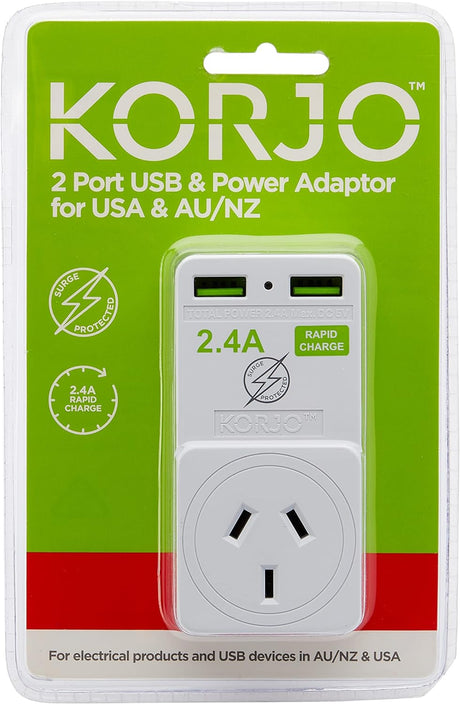
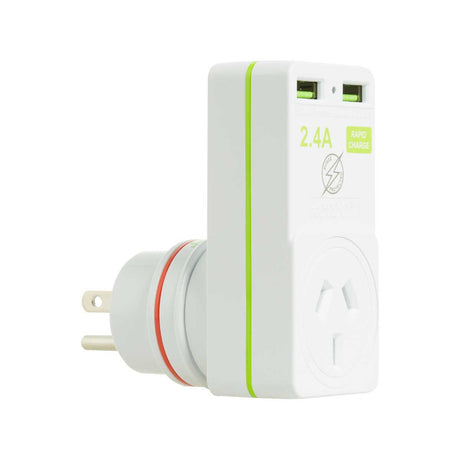
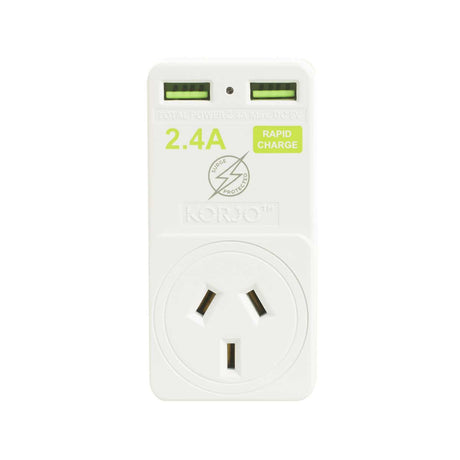
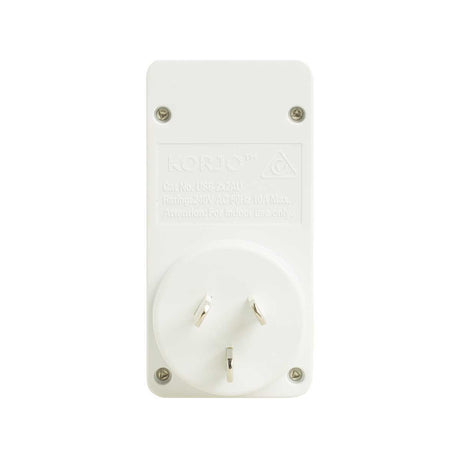
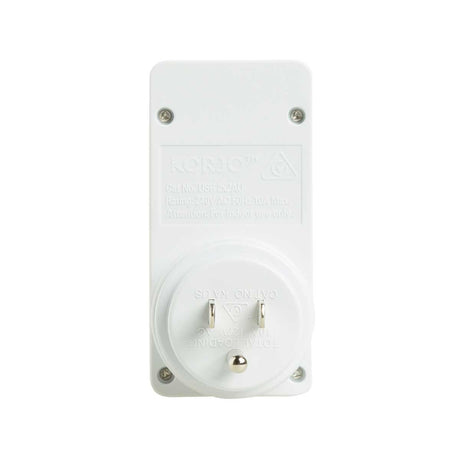
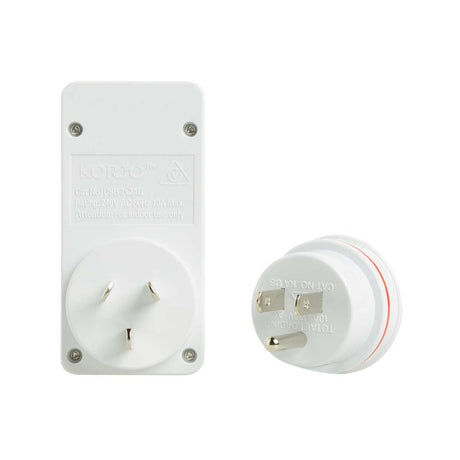
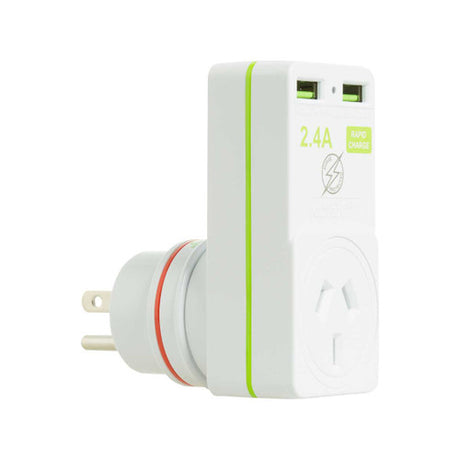
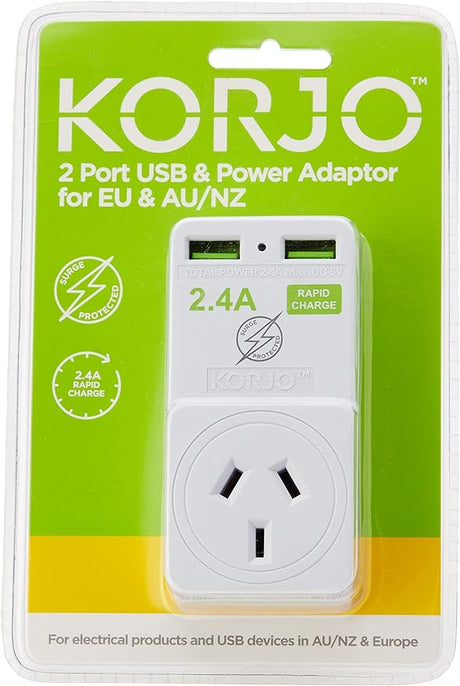
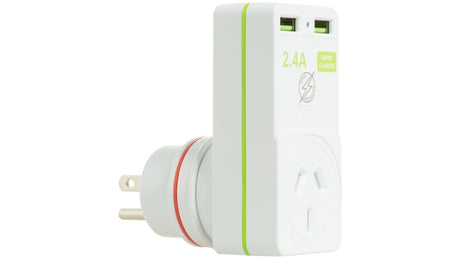
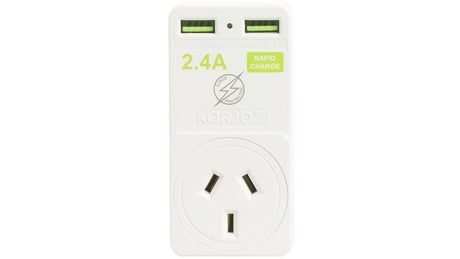
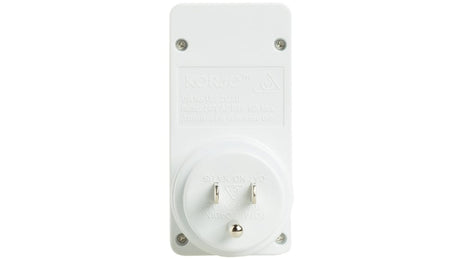
North America and Japan use flat 2-pin plugs — similar in shape to Australia's but oriented differently. Note: Japan runs on 100V (vs Australia's 230V), so check your device is dual-voltage before plugging in. Korjo produces both a standard USA/Canada adaptor and a USB-equipped version for charging multiple devices.
Multi-Destination & Universal
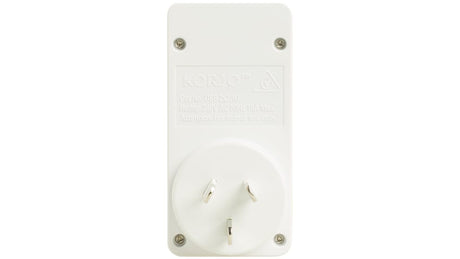
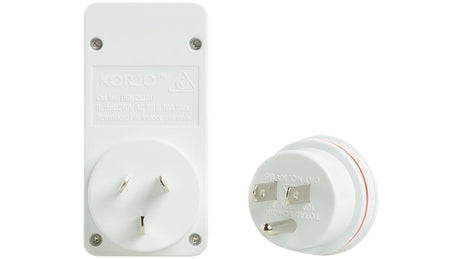
Heading to multiple countries on one trip? Korjo's universal travel adaptor covers the widest range of destinations in a single compact unit — ideal for long-haul trips through Europe and Asia. Also available: a reverse adaptor that converts European, UK, and US plugs to work in Australian sockets, useful for hosting international guests or using foreign-bought appliances at home.
In-Flight — Airline Headphone Adaptor
Many older aircraft still use dual-pin headphone jacks. Without an adaptor, your standard earphones won't work with the in-flight entertainment system. Korjo's airline headphone adaptor is a compact solution that's easy to keep in your carry-on.
Do I Need a Voltage Converter Too?
An adaptor only changes the shape of the plug — it does not convert voltage. Most modern devices (laptops, phones, cameras, tablets) are dual-voltage (100–240V) and work fine worldwide with just an adaptor. Check your device's power brick for the voltage range — if it says "100–240V", you're good to go. If it only says "230V" or "240V", you'll need a separate voltage converter for countries running on 110V (USA, Japan, Canada).
Frequently Asked Questions
What travel adaptor do I need for Bali?
Indonesia (including Bali) uses Type C and Type F sockets — the standard European 2-pin round plug. Korjo's EU travel adaptor works perfectly for Bali and most of Southeast Asia including Thailand, Vietnam, and Cambodia.
What adaptor do I need for the UK?
The UK uses Type G — a unique 3-pin rectangular socket not used anywhere else in Europe. You'll need a specific UK adaptor, not a standard European one. Also valid for Ireland, Hong Kong, Singapore, and Malaysia.
Can I use one universal adaptor for a Europe and USA trip?
Yes — Korjo's universal travel adaptor is designed for exactly this scenario, covering multiple socket types in one unit. It's the most convenient option for multi-country itineraries. For a full guide to choosing the right adaptor, see our power adaptor guide for Australian travellers.
Are Korjo adaptors safe to use with Australian devices?
Yes — all Korjo adaptors are tested to meet Australian and international electrical safety standards. They are passive adaptors (no voltage conversion), so your device must be compatible with the local voltage. Always check your device's power rating before use.