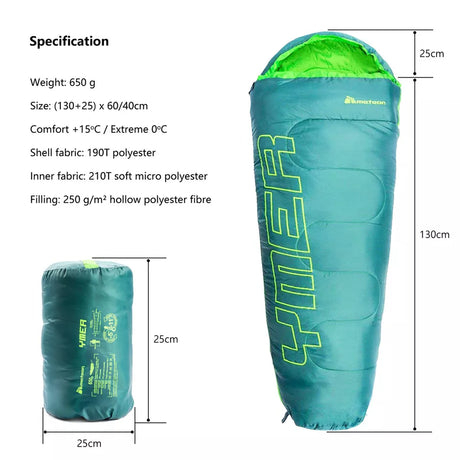
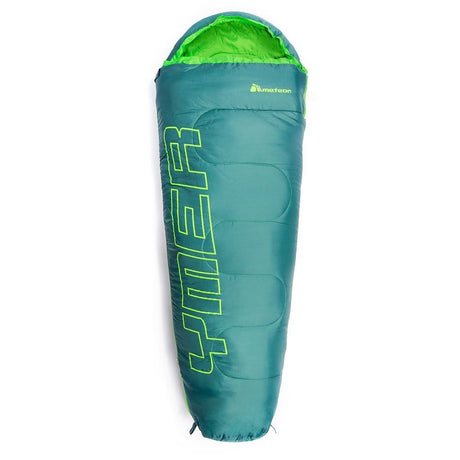
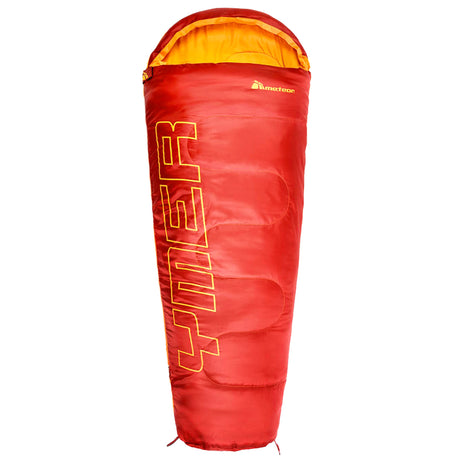
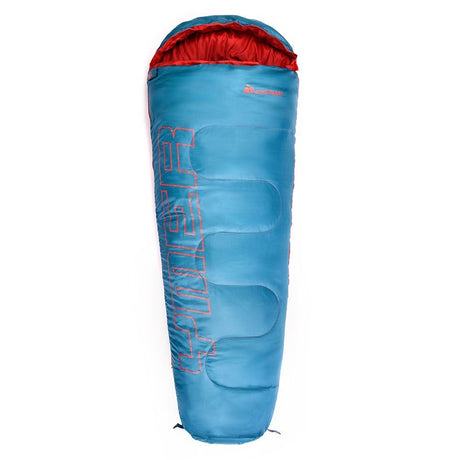
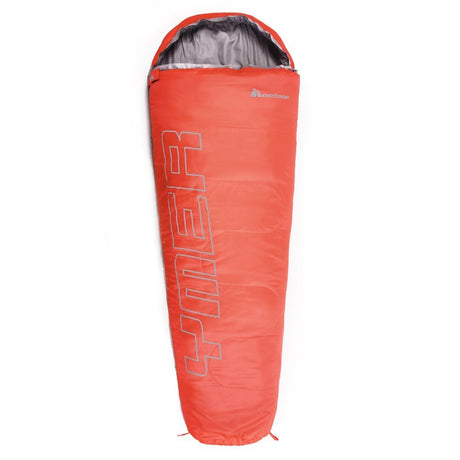
A sleeping bag is the foundation of any camping, hiking, or adventure travel kit. Choose the wrong one and you'll spend your nights too cold, too hot, or carrying far more weight than you need to. Choose the right one and you sleep well regardless of conditions — which makes everything else about your trip better. At Travel Gear, we stock sleeping bags for Australian conditions across all seasons and activity levels, from ultralight summer bags to serious four-season expedition bags rated to -10°C and below.
Understanding Sleeping Bag Temperature Ratings
Temperature rating is the most important sleeping bag specification, and also the most misunderstood. Sleeping bags sold in Australia should display EN13537 or ISO 23537 standardised temperature ratings, which include four measurements:
-
Comfort rating: The temperature at which a standard adult female sleeper feels comfortable. This is the most conservative rating and the one most people should use when selecting a bag.
-
Lower limit rating: The temperature at which a standard adult male sleeper can sleep for 8 hours without waking from cold. This is often marketed as the bag's "temperature rating."
-
Extreme rating: The survival threshold — not a comfort rating. Sleeping at this temperature without additional insulation is dangerous and should never be the planning assumption.
Our recommendation: Always select a sleeping bag based on the comfort rating, not the lower limit. If you run cold (most people do), add a further 5°C buffer.
What Temperature Rating Do You Need for Australia?
| Destination / Season |
Recommended Comfort Rating |
Fill Type |
| QLD coast, NT, WA coast — all seasons |
+10°C to +15°C |
Synthetic |
| NSW / VIC coast, SA — summer |
+5°C to +10°C |
Synthetic or down |
| NSW / VIC coast, SA — shoulder seasons |
0°C to +5°C |
Down or synthetic |
| Victorian High Country, Snowy Mountains — summer |
-5°C to 0°C |
Down preferred |
| Alpine, Kosciuszko, Cradle Mountain — any season |
-10°C to -5°C |
High-fill-power down |
| International: Southeast Asia camping |
+10°C to +15°C |
Synthetic (humidity) |
| International: European summer hiking |
0°C to +5°C |
Down or synthetic |
Down vs Synthetic Sleeping Bags
Down sleeping bags compress smaller, weigh less for equivalent warmth, and last longer than synthetic bags with proper care. The premium fill materials (800+ fill power goose down) achieve warmth-to-weight ratios no synthetic can match. The limitation: down loses most of its insulation when wet. In reliably dry conditions, down is the best choice. In wet Australian coastal conditions, humid tropical environments, or adventure activities with significant water exposure risk, down requires careful management.
Synthetic sleeping bags insulate when wet, dry faster than down, and cost less for equivalent temperature ratings at the lower end of the performance spectrum. They're heavier and less compressible than down at equivalent ratings, but more forgiving in variable conditions. For car camping, family use, and wet Australian conditions, synthetic fill is often the practical choice.
Pair your sleeping bag with a sleeping bag liner to extend its temperature range by up to 8°C and add a washable hygiene layer for hostel and hut use. Add a sleeping mat for ground insulation — you lose more warmth through conduction to cold ground than through radiation into cold air.
Frequently Asked Questions
What sleeping bag do I need for camping in Australia?
Depends entirely on where and when. Coastal Queensland camping in summer: a +10°C synthetic bag works well. Victorian alpine camping: you need at least a -5°C comfort-rated bag, preferably down. Always check the minimum overnight temperature for your specific location and season, then select a bag rated 5°C colder than that minimum to account for individual cold sensitivity and wind chill.
How do I wash a sleeping bag?
Machine wash on a gentle/delicates cycle in a front-loading machine (not a top-loader with an agitator, which can tear baffles). Use a sleeping bag-specific detergent or gentle down wash for down bags, standard gentle detergent for synthetic. Tumble dry on low heat with two or three tennis balls to break up clumping. Never dry clean a down sleeping bag — the solvents destroy down oils and dramatically reduce loft.
How long does a sleeping bag last?
A quality down sleeping bag, properly cared for, lasts 15–25 years of regular use. Synthetic bags typically last 5–10 years before loft degrades. The key to longevity: store loose (never compressed in its stuff sack long-term), clean regularly, and dry completely before storage. Compressed storage is the single biggest cause of premature sleeping bag failure.